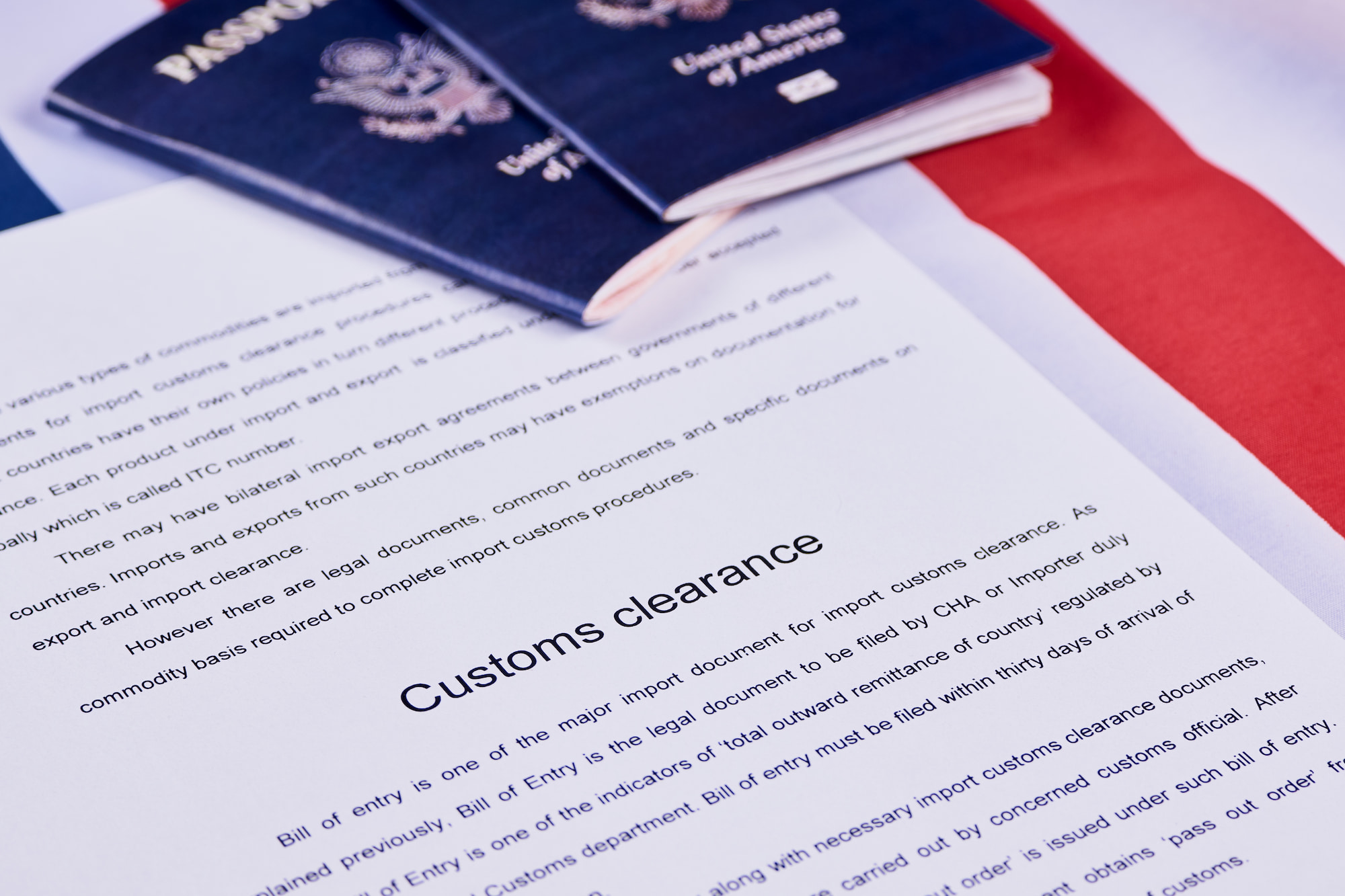
One of the most important things an importer should know before bringing goods into the United States is which documents are needed for customs clearance. Customs clearance is the process of declaring imported goods to U.S. Customs and Border Protection (CBP).
Knowing what paperwork to provide can help simplify the clearance process and prevent unnecessary delays. The exact import documentation can vary depending on the commodity, transportation method, and other requirements that apply to the shipment.
This article explains the most common documents used for U.S. customs clearance and when additional paperwork may be required. If you are unsure what applies to your shipment, a licensed customs broker can review the entry requirements before the goods arrive.
Why Are Customs Clearance Documents Important?
When bringing shipments into the U.S., having the correct documentation can save time and money. Incorrect or missing paperwork can result in customs placing a hold on your shipment. For businesses, a Customs delay can also affect delivery commitments to customers. If cargo is already at the port or terminal, delays can also contribute to storage, demurrage or other charges once the applicable free time expires.
Documents Commonly Needed for U.S. Customs Clearance
Commercial Invoice – The commercial invoice is one of the main documents used in a Customs entry. It provides information about the transaction and merchandise, including the buyer and seller, product description, quantity, value, currency, and country of origin. CBP uses this information when determining the classification, customs value, and applicable duties.
Product descriptions should be specific enough for the customs broker and CBP to understand what is being imported. Generic descriptions such as “parts,” “samples,” or “accessories” may require additional clarification.
Bill of Lading or Air Waybill – The carrier issues a Bill of Lading for ocean freight or an Air Waybill for air freight. These transportation documents identify the shipment, shipper, consignee, and routing details and help connect the Customs entry to the arriving cargo.
In certain circumstances, the Bill of Lading or Air Waybill can also serve as evidence of the right to make entry. Your customs broker will normally need the relevant shipment information before preparing the entry.
Certificate of Origin – A separate Certificate of Origin is not required for every U.S. import. However, the country of origin of the merchandise must still be determined correctly.
Proof or certification of origin may be required in particular circumstances, for example, when claiming preferential tariff treatment under a trade agreement or when specific regulations apply to the product.
The country from which the goods are shipped is not necessarily the same as their country of origin, so confirm the requirement with your customs broker before shipping.
Packing List – This shows how the shipment is physically packed and commonly includes package counts, quantities, weights, dimensions and identifying marks or numbers.
Although it contains some of the same information as the Commercial Invoice, it does not replace the invoice. The quantities and product details on both documents should be consistent.
Arrival Notice – The carrier or its agent normally sends an arrival notice to the consignee as the shipment approaches or reaches the destination. This lets the consignee know the location details of the shipment. The Arrival Notice is useful for coordinating the shipment, but it is not itself a Customs entry document and does not mean the cargo has been released by CBP.
Other Documents Your Customs Broker May Need
The documents above cover the most common commercial and transportation paperwork, but additional information may be needed depending on the shipment.
- Customs Power of Attorney – If a licensed customs broker is filing on your behalf, the broker must have authority to conduct Customs business for the importer. CBP guidance requires brokers to execute the Power of Attorney directly with the importer or drawback claimant rather than through a third-party intermediary.
- Customs Bond – A bond may be required depending on the type of Customs entry. Importers that ship regularly may use a continuous bond, while a single-entry bond may be appropriate for an individual shipment.
- Importer information – A new importer may need to establish or update its importer identity with CBP before the first entry can be completed.
- Importer Security Filing (ISF) – For applicable cargo arriving in the U.S. by ocean vessel, advance ISF information must be submitted to CBP. CBP states that the ISF requirement applies to vessel cargo and that the importer remains responsible for the accuracy of the filing even when an agent files it.
- Product-specific permits or certificates – Goods regulated by FDA, USDA, EPA, NHTSA or another government agency can require additional documentation.
The exact requirements depend on the goods, value, country of origin and entry type. This is why the first question a customs broker will usually ask is what exactly are you importing?
What Documents Should I Send My Customs Broker?
If you are contacting a customs broker about a commercial shipment, start by sending:
- the Commercial Invoice
- Packing List
- Bill of Lading or Air Waybill information
- the importer’s legal name and contact details
- a clear description of the goods and their country of origin
- any permits, certificates or other regulatory documents already available
If the shipment is arriving by ocean, contact the broker early enough to deal with ISF and other pre-arrival requirements.
If the cargo is already in transit or at the port, send whatever documents you have rather than waiting until the file is perfect. The broker can identify what is still missing.
When Should You Contact a Customs Broker?
The documents required for Customs clearance vary according to the merchandise and the type of entry.
Food, medical devices, vehicles, agricultural products, chemicals, and other regulated goods can require additional agency information or permits.
Many importers use a licensed customs broker to review the documents, prepare the Customs entry, calculate applicable duties, and deal with CBP on their behalf.
A1 can clear shipments entering through ports across the United States. If your cargo is arriving in South Florida, see our Miami customs broker services. We also assist importers using New York and New Jersey ports through our New York customs broker service.
If you are importing commercial goods into the United States and are unsure which documents you need, contact A1 Worldwide Logistics at 305-821-8995. Our customs brokerage team can review the shipment information, identify missing documentation, and prepare the Customs entry where appropriate.
What Documents Do I Need for Customs Clearance?
For a typical U.S. commercial import, the key documents commonly include a Commercial Invoice, Packing List and Bill of Lading or Air Waybill. Additional requirements can include a Customs bond, Power of Attorney, ISF information for ocean shipments and permits or certificates required for regulated goods. The exact documents depend on the shipment.
Regulatory note: This guide provides general information and is not legal advice. U.S. import requirements can vary by commodity, country of origin, shipment and entry type. Importers should confirm current requirements with the relevant U.S. agency and, where appropriate, a licensed customs broker or legal adviser before shipping.