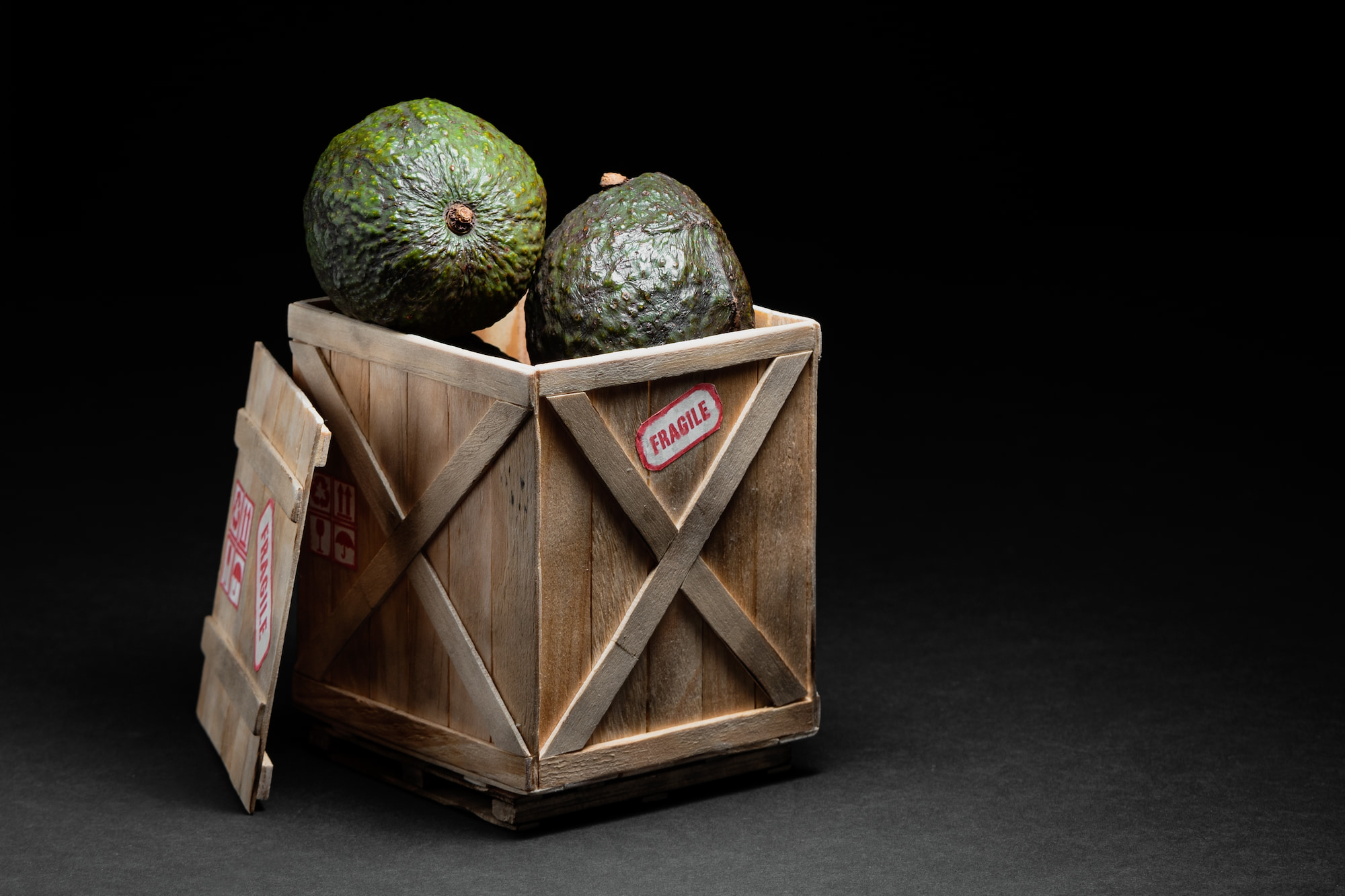
Businesses importing avocados into the U.S. can benefit from understanding the process before the fruit leaves the country of origin. According to the USDA Economic Research Service, the United States imported a record $3.8 billion of fresh avocados in 2024, with Mexico accounting for 91% of import value. Total fresh avocado imports reached approximately 2.7 billion pounds during the year.
Mexico remains by far the largest supplier, but the U.S. also imports avocados from countries including Peru, Colombia, and the Dominican Republic. Because avocados are perishable agricultural products, importers need to consider both the USDA requirements that apply to the particular origin and the logistics needed to keep the fruit in suitable condition during transportation.
Despite their popularity, avocados can be challenging to import because they are perishable and are also subject to agricultural import requirements. This article explains what to check before shipping, how avocados are transported, and what happens when the shipment reaches the United States.
What Are the Requirements for Importing Avocados Into the U.S.?
Before bringing avocados into the U.S., a shipper needs to understand that the requirements depend partly on the type of avocado and the country of origin. USDA’s Animal and Plant Health Inspection Service (APHIS) regulates the plant-health side of fresh fruit imports, while USDA’s Agricultural Marketing Service (AMS) applies separate grade, maturity, and inspection requirements to imported avocados.
APHIS requirements can vary by country, so importers should check the current conditions for the specific avocado and origin in the USDA Agricultural Commodity Import Requirements database before the shipment leaves the exporter.
For commercial avocado shipments of more than 55 lbs., USDA AMS requires inspection and certification. Imported avocados must grade at least U.S. No. 2. Maturity requirements can also apply depending on the variety, although AMS provides specific exceptions for Hass, Fuerte, Zutano and Edranol avocados.
USDA recommends arranging the required inspection in advance rather than waiting until the cargo arrives. For port inspection offices, avocado importers are advised to arrange inspection and certification at least one day before entry.
Requirements can vary considerably between agricultural products. See A1’s U.S. import guides for guidance on other commercial imports.
Importing Avocados From Mexico, Peru, Colombia and Other Countries
Mexico dominates the U.S. avocado import market. USDA reported that Mexican avocados represented 91% of U.S. fresh-avocado import value in 2024. In Mexico, Michoacán and Jalisco are currently the only states authorized to export avocados to the United States, and fruit must come from approved orchards operating under the U.S.-Mexico avocado export program.
Peru and Colombia are also established suppliers. USDA data shows that the majority of avocado imports entering through the Philadelphia customs district in 2024 came from those two countries, while non-Hass avocado imports were primarily sourced from the Dominican Republic.
The import requirements should still be checked for the exact country and commodity before shipment. APHIS can change or update conditions in response to pest risks. For example, APHIS updated the requirements for fresh Hass avocados from Guatemala in 2025 after identifying an additional quarantine-pest risk.
It is also important to understand the risks associated with shipping avocados. Since avocados are perishable, poor handling or unsuitable temperatures can affect the quality of the fruit before it reaches the importer.
The exporter should use appropriate packaging and handling to protect the fruit during transportation. The temperature and cold-chain requirements should be planned with the exporter, carrier, and freight forwarder before the shipment begins.
How Much Is the Import Duty on Avocados?
Fresh avocados are classified under HTS 0804.40.00. The current general U.S. duty rate is 11.2 cents per kilogram, but that does not mean every avocado shipment pays this rate.
Special tariff treatment can apply depending on country of origin. Qualifying avocado imports from several U.S. trade-agreement partners, including Mexico, Colombia and Peru, can receive preferential duty treatment.
The importer should therefore confirm the origin and current tariff treatment before calculating the landed cost rather than applying the general rate automatically. A customs broker can verify the current classification and applicable rate.
How Are Avocados Shipped to the United States?
When the shipper is ready to transport the avocados, refrigerated transportation may be needed to help protect the fruit from spoilage. Avocados can enter the United States by air, land or sea depending on the country of origin and shipment.
Ocean shipments can use refrigerated containers, while imports from Mexico frequently enter the United States by land. USDA reported that 86% of U.S. fresh-avocado imports by volume entered through the Laredo customs district in 2024, all originating in Mexico.
A freight forwarder can coordinate the international transportation and help plan the appropriate equipment and route for a commercial avocado shipment.
What Documents Are Needed to Import Avocados?
The documents depend on the country of origin and the shipment, but a commercial avocado import will commonly involve a Commercial Invoice, Packing List and Bill of Lading or Air Waybill.
Additional plant-health documentation, including a phytosanitary certificate or permit, may be required depending on the applicable APHIS conditions for the origin. Any USDA AMS inspection and certification requirements should also be arranged before entry where applicable.
A Certificate of Origin or other origin documentation may be relevant where preferential tariff treatment is being claimed.
See our guide to documents used in customs clearance for more information about common import documents.
Fresh avocados are also imported food products, so applicable FDA import requirements should be considered alongside the USDA requirements. Depending on the transaction, this can include Prior Notice and Foreign Supplier Verification Program requirements. A1 has a separate guide explaining FSVP requirements for food importers.
What Happens When Avocados Arrive in the U.S.?
Once the avocados reach the port of entry, the shipment needs to satisfy the applicable Customs, plant-health, and USDA inspection requirements before it can move into U.S. commerce.
USDA AMS inspection and certification is required for commercial avocado shipments above the applicable threshold, while CBP and USDA authorities can also review the shipment for compliance with plant-health and entry requirements.
A customs broker can prepare the Customs entry, review the shipment documentation, and coordinate the information needed for release. Once the cargo is released, A1 can also arrange trucking and final delivery.
Importing Avocados with A1 Worldwide Logistics
A1 Worldwide Logistics provides customs brokerage and international freight forwarding for commercial avocado imports into the United States. If you are importing avocados from Mexico, Peru, Colombia, or another country, contact A1 at 305-821-8995 or info@a1wwl.com with the country of origin, quantity, and shipment details. We may be able to help avoid delays and facilitate a smooth importing process.
Regulatory note: This guide provides general information and is not legal advice. U.S. import rules and agency requirements can change and may vary by product, country of origin, and shipment. Importers should confirm current requirements with the relevant U.S. agency and, where appropriate, a licensed customs broker or legal adviser before shipping.